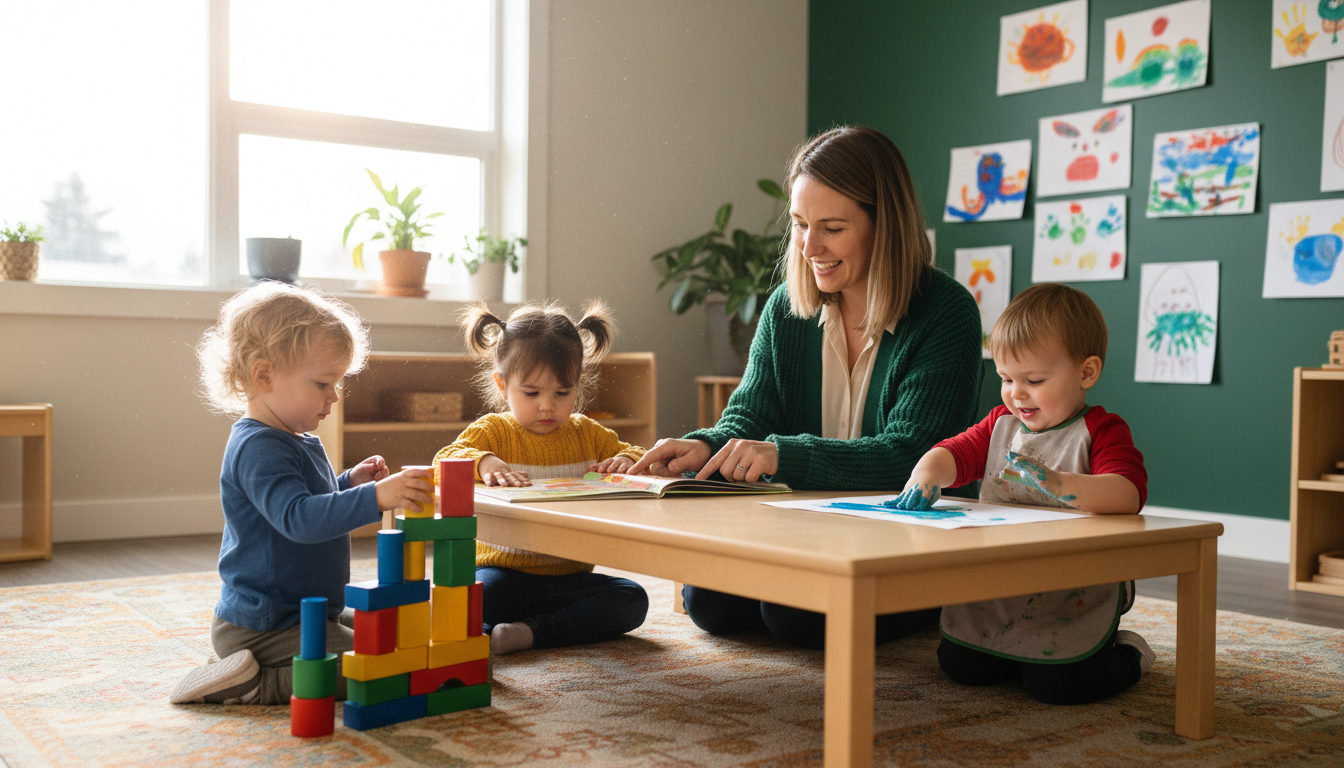


Sensory play — any activity that engages a baby’s senses (touch, sight, hearing, taste, smell, and proprioception) — is one of the most powerful tools in infant brain development. Far from being just a messy activity that keeps babies occupied, sensory play is the primary mechanism through which infant brains build the neural connections that underlie all future learning. Here is what the research shows and what quality infant care does with it.
For information on BC childcare subsidies and licensed daycare regulations, visit the Government of BC Childcare Resources. Smiling Kids Childcare Centre is a licensed childcare facility meeting all BC childcare regulations.
Why Sensory Input Is Essential in the First Year
The infant brain is in a period of extraordinary neurological growth — forming over 1 million new neural connections per second. But neurons alone are not enough: the connections between neurons (synapses) are built through repeated, varied, meaningful sensory experience. When a baby repeatedly touches a rough surface, feels a soft blanket, hears a song, or watches a mobile move, they are building the neural pathways that process sensory input, coordinate movement, anticipate patterns, and eventually support language and abstract thought.
Sensory play is not separate from learning — it IS learning, in the form the infant brain is built to receive.
The 7 Senses and What Sensory Play Builds
Touch (Tactile)
Touch is the first sense to develop in utero and the richest source of sensory input in early infancy. Tactile experiences — smooth, rough, soft, hard, wet, dry, warm, cold — build the somatosensory cortex (the brain region that processes body sensation), support fine motor development, and provide the basis for early problem-solving (“this texture behaves differently from that texture”).
In our infant program: texture exploration bins (fabric swatches, rice, water, sand for older infants), tummy time on textured surfaces, barefoot outdoor play on grass and natural surfaces.
Sight (Visual)
Visual development in infancy goes from near-blindness at birth to full color vision and depth perception by 6 months. Visual sensory play — high-contrast images for newborns, tracking moving objects, color exploration for older infants — builds the visual cortex and lays foundations for reading and spatial reasoning.
In our infant program: high-contrast black-and-white cards for young infants, color sorting toys for 6+ month infants, light tables and mirror play for older infants.
Hearing (Auditory)
Auditory sensory experiences — music, rhythm, language, nature sounds, silence — build the auditory processing regions of the brain and are the foundation of language development. Singing to babies is not just soothing — it is a precise brain-building activity, training the auditory system to parse rhythmic and melodic patterns that the brain will later apply to language processing.
In our infant program: daily singing and songs with rhythm instruments, varied sound environments (quiet and loud), narration of all caregiving routines.
Proprioception and Vestibular (Body Position and Movement)
The proprioceptive system (body position awareness) and vestibular system (balance and movement) are foundational for all motor development — from rolling and crawling to eventually walking and writing. These systems are stimulated by: being carried, rocking, bouncing, tummy time, swinging, and all forms of physical movement.
In our infant program: daily tummy time, caregiver-led movement experiences (rocking, bouncing), outdoor play, and age-appropriate climbing and movement challenges for mobile infants.
Practical Sensory Play Activities by Age
0–6 Months
- High-contrast black and white visual cards (newborn–3 months)
- Texture exploration with fabric swatches
- Rattles and shakers with varied sounds
- Singing and rhythmic movement
- Face-to-face mirroring games
6–12 Months
- Water and splash play (supervised)
- Soft food exploration (early complementary foods as sensory play)
- Crawling on textured surfaces (grass, carpet, wood floor)
- Object dropping and banging (cause and effect + auditory)
- Mirror play
12–18 Months
- Sand and water play
- Finger painting and mud play
- Simple puzzles (proprioceptive + cognitive)
- Rolling, tumbling, climbing on safe surfaces
Sensory Play at Smiling Kids Coquitlam
Sensory play is woven through our infant and toddler program every day — not as a scheduled “sensory activity” block but as the natural fabric of the day. Our educators choose materials and activities intentionally based on each child’s current sensory preferences and developmental stage, observed and documented over weeks of caregiving.
Our play environment includes: texture exploration materials, water tables (age-appropriate), sand (outdoor), music and rhythm materials, light tables, mirror surfaces, and a range of natural and synthetic materials for tactile exploration.
See our sensory play environment in person — book a free tour at 604-600-4393.
Also read: What Is Play-Based Learning? | How Infant Caregivers Support Early Brain Development.
At Smiling Kids infant daycare in Coquitlam, our ITE-credentialed educators support every developmental milestone covered in this article — through our primary caregiver model and responsive, individualised care for babies 0–18 months. For our complete daycare guide including programmes, costs, and enrollment: daycare in Coquitlam.