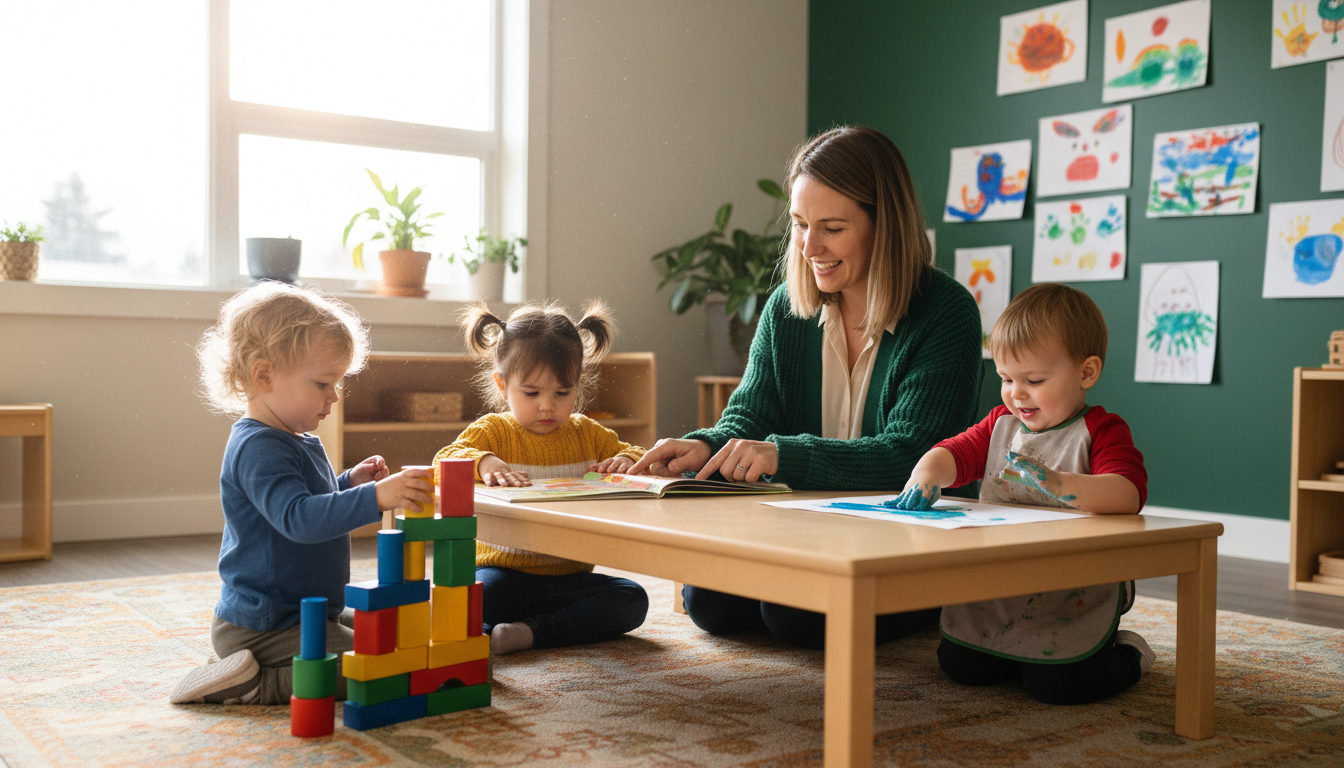


Social development is one of the most powerful outcomes of quality toddler group care — and one that parents are often surprised to see accelerate dramatically in the first weeks of enrollment. The unique combination of peer exposure, responsive educator support, and structured daily routines in a licensed daycare setting creates conditions for social learning that are genuinely difficult to replicate at home. Here’s what the research and direct practice shows about how toddler daycare programs support social development.
For information on BC childcare subsidies and licensed daycare regulations, visit the Government of BC Childcare Resources. Smiling Kids Childcare Centre is a licensed childcare facility meeting all BC childcare regulations.
Why Group Settings Accelerate Toddler Social Development
Social development in the toddler years (18–36 months) requires one thing above all others: other toddlers. Adults and babies can model and respond socially, but the specific developmental work of this period — negotiating access to toys, navigating turn-taking, managing emotional reactions to other children, watching and imitating peers — only happens in the presence of age-matched peers.
At home, even with siblings, the peer dynamic is different. Siblings are usually different ages, and parent mediation is usually available quickly. In group care, children are surrounded by true peers — children at the same developmental stage, with the same capabilities and the same limitations — and that peer mirror is developmentally unique.
From Parallel Play to Associative Play: The 18–36 Month Transition
One of the most important social developmental milestones visible in group toddler care is the transition from parallel play (playing near others without interacting) to associative play (playing with shared materials or around a shared theme without coordinated roles).
This transition typically begins around 24–30 months in most children, though the social exposure of group care often accelerates it. What parents notice:
- At 18 months: Playing near other children with occasional glances and imitation, but no direct interaction
- At 24 months: Beginning to seek specific peers, attempting to join in their play, pointing and vocalizing toward peers
- At 30–36 months: Simple cooperative games (“you chase me”), shared pretend play beginnings, reciprocal conversation with peers
These transitions happen faster and more richly in group care than in isolated settings, because the exposure and practice opportunities are simply greater.
Key Social Skills Toddlers Develop in Group Care
Turn-Taking and Sharing
Sharing is cognitively complex — it requires understanding that an object can leave your possession temporarily and return (object permanence applied to ownership), that the other person wants the object (theory of mind beginning), and that giving the object is socially rewarded. True sharing typically doesn’t develop until 3–4 years, but the foundation of turn-taking begins around 24 months with significant individual variation.
In group care, our educators actively scaffold turn-taking (“it’s Lena’s turn with the truck, then it’s your turn”) without forcing sharing before it’s developmentally possible. We work with the developmental timeline, not against it.
Emotional Regulation in Social Contexts
Toddler group care is, among other things, an emotional regulation training ground. Children in groups must navigate frustration (someone has the toy I want), excitement (my friend is here!), disappointment (the activity is ending), and jealousy — all within hours of each other, every day.
Responsive educators who name emotions, validate feelings, and coach regulation strategies (“I see you’re frustrated. Let’s take a breath and wait for the truck”) are doing the most important emotional intelligence work of early childhood. See our guide on separation anxiety, which is part of the same social-emotional regulatory work.
Conflict Resolution (Emerging)
By 30–36 months, many toddlers begin to use primitive conflict resolution skills: verbal protest instead of grabbing, seeking adult help with disputes, accepting negotiation (“you can have it after I’m done”). These are early indicators of the executive function development that characterizes the preschool and school years.
What Social Development at Smiling Kids Looks Like
At Smiling Kids Childcare in Coquitlam, our approach to toddler social development includes:
- Small, consistent peer groups — toddlers know their classmates well, and that familiarity deepens social learning
- Educator narration of social interactions — naming what’s happening and why
- Proactive emotion coaching — before conflicts escalate, not only after
- Documentation of social milestones for parents — first peer friendships, first cooperative play, first conflict resolution attempts
- Daily outdoor time — physical shared spaces (sandboxes, climbing structures) are naturally rich social learning environments
Questions about our toddler program and how we support social development? Book a tour — 604-600-4393.
Also see: What Toddlers Learn in a Play-Based Daycare Program.
Related: Daycare Coquitlam — licensed infant and toddler care guide.