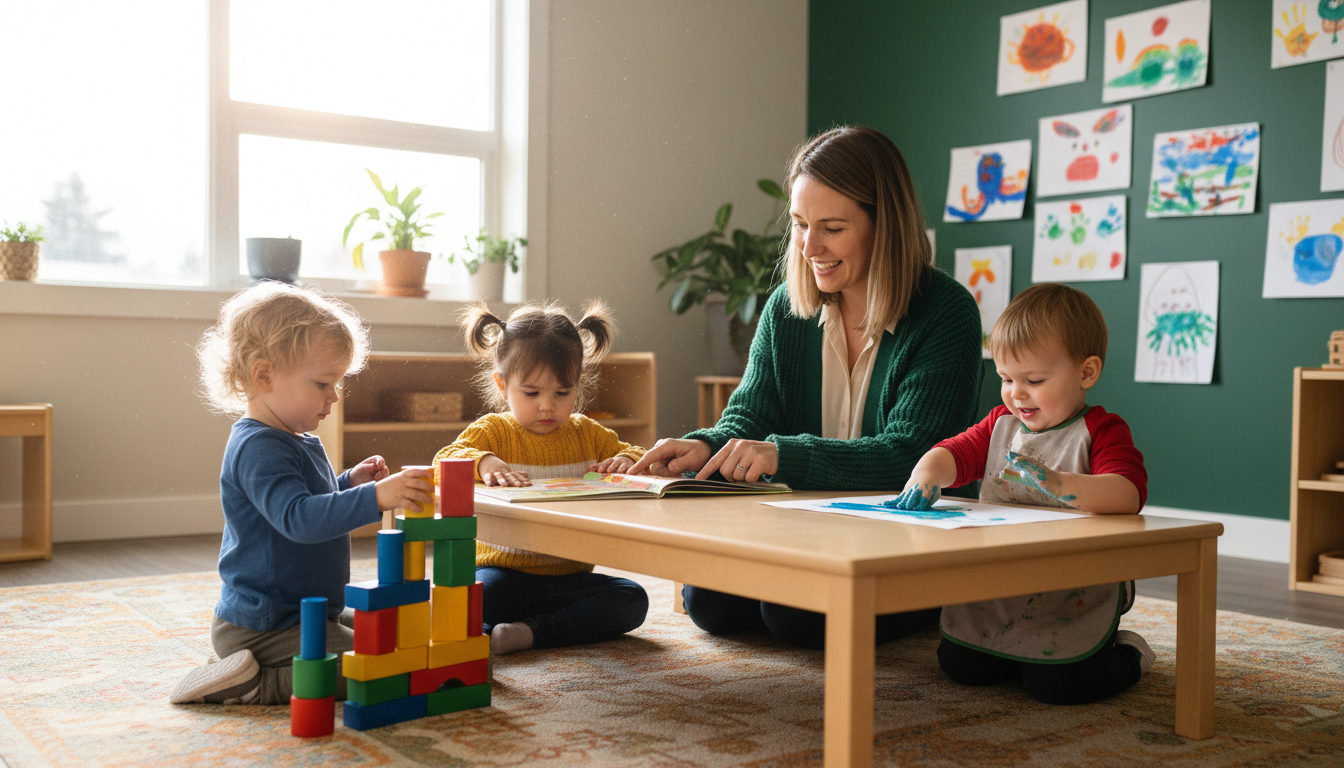


Your child’s first day at daycare is one of the most emotionally loaded events of early parenthood. Knowing exactly what to expect — for your child and for you — makes a significant difference. This guide covers the first-day sequence at licensed Coquitlam daycare, how to handle the goodbye, what happens after you leave, and how to read the daily report you receive at pickup. For our full settling-in approach at Smiling Kids: infant daycare Coquitlam | toddler daycare Coquitlam. Call 604-600-4393.
Before the First Day — What Should Already Be in Place
The first day should not actually be the first time your child meets their educator. Quality Coquitlam daycares use a 5-day settling-in process where Day 1 is a parent-and-child visit (parent stays the whole session), and the first real separation doesn’t happen until Day 2. If you’re reading this the night before Day 1, you’re in good shape — that parent-present first session is designed to be easy.
What should be done before the first settling day: how to prepare your baby for daycare.
The First Day (Day 1 of Settling — Parent Stays)
What You Do
- Arrive at your agreed start time (typically at centre opening or slightly after)
- Bring your daycare bag: labelled full change of clothes × 2, feeding supplies, soother if used, sleep sack
- Follow your primary educator’s lead — they will introduce your child to the environment while you are present as a safety base
- Let the educator engage your child. Resist the urge to jump in every time your child looks uncertain — part of Day 1 is observing that the educator is a safe adult
- Stay for the agreed session (typically 1 hour for Day 1)
What to Observe
Day 1 is your best quality check. Watch how your child’s primary educator:
- Initiates contact with your child (warmly and at the child’s pace, not intrusively)
- Narrates what they’re doing (“I’m going to pick up this red ball — look at the red ball”)
- Responds when your child shows discomfort
- Involves you appropriately vs trying to separate immediately
Day 2 — The First Real Separation
The Goodbye: The Most Important 30 Seconds
Research on separation and attachment is clear: the quality of the goodbye affects how children settle, often more than the length of the separation. The research-backed goodbye protocol:
- Brief: 30-60 seconds maximum. A long goodbye teaches your child that staying upset long enough might bring you back.
- Warm but calm: Communicate warmth and confidence — not anxiety. Children read your emotional state. If you’re visibly distressed, your child’s threat assessment system reads “this must be dangerous.”
- Consistent: Use the same phrase and ritual every day. “I love you, I’ll see you at pickup, have fun with [educator’s name]” — then leave. Same words, same kiss, same timing.
- Then actually leave: Don’t linger in the doorway, don’t peek around the corner. If you hear crying, the educator is handling it. Re-entering after your goodbye resets the settling progress.
What Happens After You Leave
At Smiling Kids, your child’s primary educator engages them immediately after your goodbye — offering a preferred toy or activity, making brief warm contact, and staying close without intruding. If your child cries, the educator stays present and co-regulates (holds if appropriate, sits nearby, narrates calmly). For most children, crying stops within 5-15 minutes of parent departure. Your educator will contact you within 20 minutes of your departure to tell you how your child settled — you should not have to wonder or call in.
What the Pickup Debrief Tells You
At Smiling Kids, the daily report covers: nap times and durations, feeding times and amounts, diaper changes, notable activities, observed mood and social moments, and any developmental observations. How to read your first few reports:
- Ate less than normal: Common for the first 2-5 days — stress mildly suppresses appetite. Not alarming unless it persists beyond a week.
- “Settled after 10 minutes”: Good. Settling time typically decreases week-over-week.
- “Shorter nap than usual”: Common in a new environment. The new sounds and smells mean some babies don’t enter deep sleep cycles as readily in the first week.
- “Was very engaged in play”: A very good sign — engagement with the environment is a secure-base behaviour.
Frequently Asked Questions — First Day at Daycare
Should I stay for my child’s first day at daycare?
Yes, for Day 1 of the settling-in process. The first session is designed as a parent-present visit. Full separation doesn’t happen until Day 2 after the child has had a chance to begin building familiarity with their educator and environment while you’re present as a safety base.
What if my child cries all day on their first day?
Sustained crying all day (not just at drop-off) is uncommon during a properly paced settling-in process, because Day 1 is a parent-present visit and Day 2 separation is brief (30 minutes). If your child is extremely distressed for extended periods on the first real separation day, talk to your educator — it may mean the settling pace needs to slow. Extended distress (not just drop-off protest) for more than a few days is worth discussing.
Related Reading