

The 18–24 month period is often called “the language explosion” — and for good reason. Many toddlers in this window go from a handful of words at 18 months to 50+ words by 24 months, begin putting two words together, and start using language purposefully to negotiate, protest, request, and connect. It is also a period of intense social development, as toddlers move from parallel play toward genuine peer interest. For Coquitlam parents, here’s what to expect.
Language Milestones: 18–24 Months
Vocabulary Growth
The canonical language milestones for this period:
- 18 months: Most toddlers have 10–20 meaningful words. The BC developmental milestone marker is 8+ words at 18 months; fewer than this warrants monitoring and possible speech-language referral.
- 21 months: Vocabulary is typically growing rapidly — 2–5 new words per week for many toddlers in this period.
- 24 months: Most toddlers have 50–200+ words. The 50-word milestone at 24 months is a widely used clinical benchmark; fewer than 50 clear words at 24 months is worth discussing with a pediatrician.
Note: vocabulary counts should include all consistent, intentional communicative forms — not just clearly articulated words. “Ba” consistently used to mean “ball” counts as a word even if it doesn’t sound like the adult form.
Two-Word Combinations
One of the most significant language milestones of this period is the emergence of two-word combinations — “more milk,” “daddy go,” “big doggy,” “mama up.” These typically emerge somewhere between 18 and 24 months. Two-word combinations mark the beginning of syntax — the toddler is now doing more than labelling; they’re creating relationships between words.
At 24 months, most children use two-word combinations regularly. Absence of any two-word combinations by 24 months warrants speech-language referral.
Pronoun Confusion (Normal)
Toddlers in this age range often confuse pronouns — saying “me want” instead of “I want,” using “him” for “her,” etc. This is a normal developmental stage; the pronoun system is cognitively complex and takes until age 3–4 to fully master.
Jargon Fading
Many toddlers at 18 months still produce strings of “jargon” — utterances that have the rhythm and intonation of sentences but no intelligible words. By 24 months, this typically gives way to more recognizable words and phrases as vocabulary grows.
Social Milestones: 18–24 Months
Parallel Play Solidifies
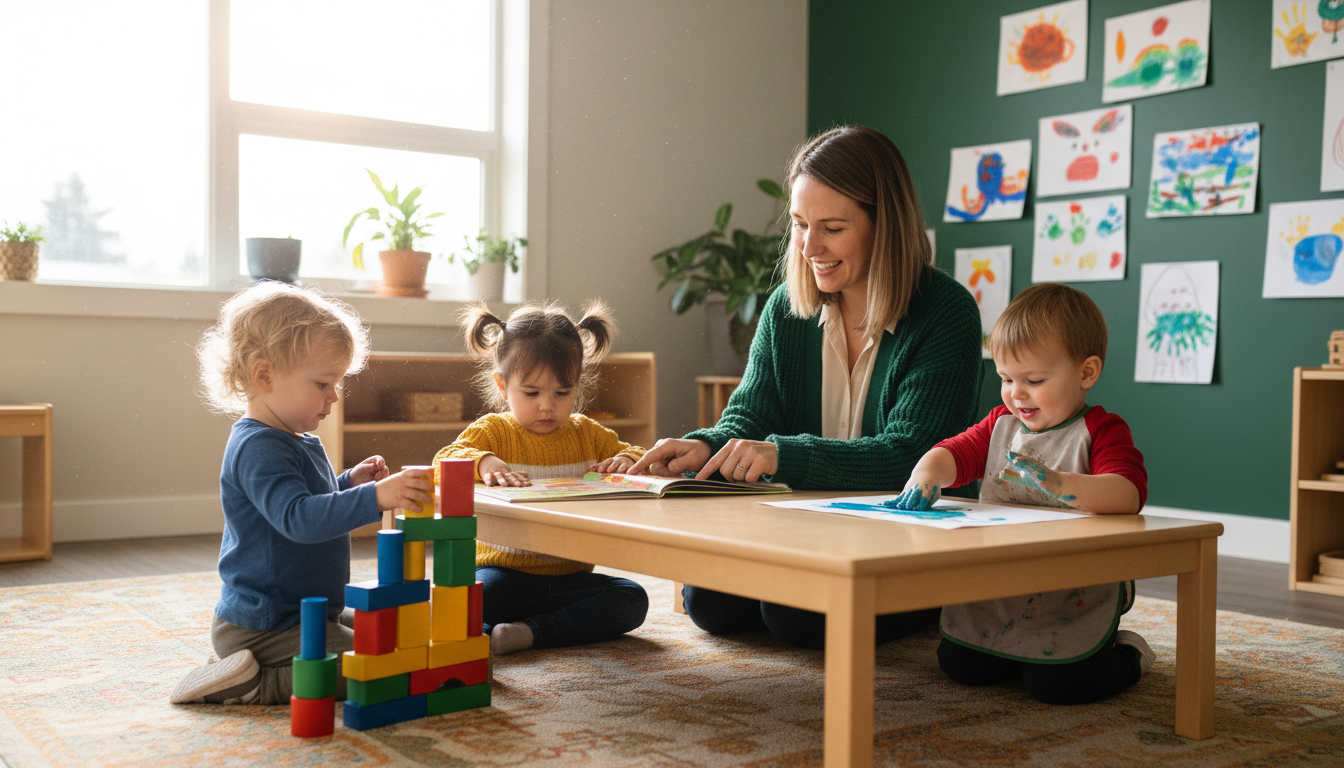
At 18–24 months, parallel play — playing near other children without interactive engagement — is the developmentally expected social mode. Toddlers at this stage are keenly interested in peers: watching them, imitating them, staying physically close. But sustained cooperative play is not yet developmentally available for most toddlers in this range.
This means: a toddler who plays next to other children without playing “with” them is not unsocial. They are exactly where they should be developmentally.
Beginning Peer Interest and Imitation
Even without cooperative play, the peer learning that happens at this age through imitation is remarkable. Toddlers in group care at 18–24 months learn from watching each other: a child who wasn’t climbing the slide last week watches peers do it and tries it themselves. This peer modeling is one of the genuine developmental advantages of group care.
Empathy Precursors Emerging
Around 18–24 months, many toddlers begin to show the precursors of empathy: bringing a comfort object to a crying peer, patting a friend who is hurt, showing distress when another child is distressed. This is not yet developed empathy in the full sense, but it is the emergence of prosocial behavior from the recognition of others’ emotional states.
Tantrums Peak
18–24 months is typically the peak period for tantrums. Toddlers at this stage have significant desires and intentions, but limited language to express them, limited regulatory capacity to tolerate frustration, and limited cognitive capacity to understand adult explanations. The gap between what they want and what they can express or receive is at its largest. This is developmentally normal and temporary. See our guide on supporting toddler emotional regulation.
How Licensed Daycare Supports 18–24 Month Development
At Smiling Kids in Coquitlam, our toddler program approach for this age range centers on:
- Language-rich environments and serve-and-return with every vocalization
- Parallel play support without premature pressure toward cooperative play
- Emotion coaching: naming feelings, validating, teaching words for emotions
- Consistent daily routines that reduce frustration triggers
- Small peer groups that allow developing friendships
Questions about our program for 18–24 month olds? Contact Smiling Kids — 604-600-4393.
Continue: Toddler Language Development at Daycare.
Smiling Kids provides ITE-credentialed infant daycare in Coquitlam for babies 0–18 months — primary caregiver model, responsive care, CCFRI participating. Complete daycare guide: daycare Coquitlam.